Salsa Digital: Mastering Drupal migration: Guide to seamless website upgrades
Why choose Drupal CMS?
GNU Parallel 20240322 (‘Sweden’) has been released. It is available for download at: lbry://@GnuParallel:4
Quote of the month:
GNU parallel ftw
— hostux.social/@rmpr @_paulmairo@twitter
New in this release:
GNU Parallel – For people who live life in the parallel lane.
If you like GNU Parallel record a video testimonial: Say who you are, what you use GNU Parallel for, how it helps you, and what you like most about it. Include a command that uses GNU Parallel if you feel like it.
GNU Parallel is a shell tool for executing jobs in parallel using one or more computers. A job can be a single command or a small script that has to be run for each of the lines in the input. The typical input is a list of files, a list of hosts, a list of users, a list of URLs, or a list of tables. A job can also be a command that reads from a pipe. GNU Parallel can then split the input and pipe it into commands in parallel.
If you use xargs and tee today you will find GNU Parallel very easy to use as GNU Parallel is written to have the same options as xargs. If you write loops in shell, you will find GNU Parallel may be able to replace most of the loops and make them run faster by running several jobs in parallel. GNU Parallel can even replace nested loops.
GNU Parallel makes sure output from the commands is the same output as you would get had you run the commands sequentially. This makes it possible to use output from GNU Parallel as input for other programs.
For example you can run this to convert all jpeg files into png and gif files and have a progress bar:
parallel –bar convert {1} {1.}.{2} ::: *.jpg ::: png gif
Or you can generate big, medium, and small thumbnails of all jpeg files in sub dirs:
find . -name ‘*.jpg’ |
parallel convert -geometry {2} {1} {1//}/thumb{2}_{1/} :::: – ::: 50 100 200
You can find more about GNU Parallel at: http://www.gnu.org/s/parallel/
You can install GNU Parallel in just 10 seconds with:
$ (wget -O – pi.dk/3 || lynx -source pi.dk/3 || curl pi.dk/3/ ||
fetch -o – http://pi.dk/3 ) > install.sh
$ sha1sum install.sh | grep 883c667e01eed62f975ad28b6d50e22a
12345678 883c667e 01eed62f 975ad28b 6d50e22a
$ md5sum install.sh | grep cc21b4c943fd03e93ae1ae49e28573c0
cc21b4c9 43fd03e9 3ae1ae49 e28573c0
$ sha512sum install.sh | grep ec113b49a54e705f86d51e784ebced224fdff3f52
79945d9d 250b42a4 2067bb00 99da012e c113b49a 54e705f8 6d51e784 ebced224
fdff3f52 ca588d64 e75f6033 61bd543f d631f592 2f87ceb2 ab034149 6df84a35
$ bash install.sh
Watch the intro video on http://www.youtube.com/playlist?list=PL284C9FF2488BC6D1
Walk through the tutorial (man parallel_tutorial). Your command line will love you for it.
When using programs that use GNU Parallel to process data for publication please cite:
O. Tange (2018): GNU Parallel 2018, March 2018, https://doi.org/10.5281/zenodo.1146014.
If you like GNU Parallel:
If you use programs that use GNU Parallel for research:
If GNU Parallel saves you money:
GNU sql aims to give a simple, unified interface for accessing databases through all the different databases’ command line clients. So far the focus has been on giving a common way to specify login information (protocol, username, password, hostname, and port number), size (database and table size), and running queries.
The database is addressed using a DBURL. If commands are left out you will get that database’s interactive shell.
When using GNU SQL for a publication please cite:
O. Tange (2011): GNU SQL – A Command Line Tool for Accessing Different Databases Using DBURLs, ;login: The USENIX Magazine, April 2011:29-32.
GNU niceload slows down a program when the computer load average (or other system activity) is above a certain limit. When the limit is reached the program will be suspended for some time. If the limit is a soft limit the program will be allowed to run for short amounts of time before being suspended again. If the limit is a hard limit the program will only be allowed to run when the system is below the limit.

/ Android Code Swag
Don’t forget to subscribe my channel for more helpful videos!
#TurkeyElections #LocalElections #RecepTayyipErdogan #ErdoganVsRivals #ElectionDay #PoliticalBattle #TurkishPolitics #ErdoganChallenge #KeyRivals #PollsOpen #TurkeyPolitics
~HT.178~PR.152~ED.102~GR.123~
In this guide, I show you which parameters are most important for each video on your channel.
To Sign Up For The Keywords Tracking System:
https://say-v.com/
Join now the community of Webmasters and SEO Marketers completely free:
https://www.facebook.com/groups/itayverchik
To purchase Elementor Pro, the world’s best WordPress page designer:
https://trk.elementor.com/2500
Don’t Have A Web Hosting Account Yet Or Are You Just Not Satisfied With Your Existing Hosting?
Get A 25% Discount For Cloudways Web Hosting For The First 3 Months:
https://platform.cloudways.com/signup?id=314159&coupon=VERCHIK
This is the complementary blog post for my DrupalSouth Sydney 2024 session, and also v2.0 follow up of sorts from the original 2022 version. The full presentation was much longer than this blog post, this blog post is just going to highlight the core statistics and findings.
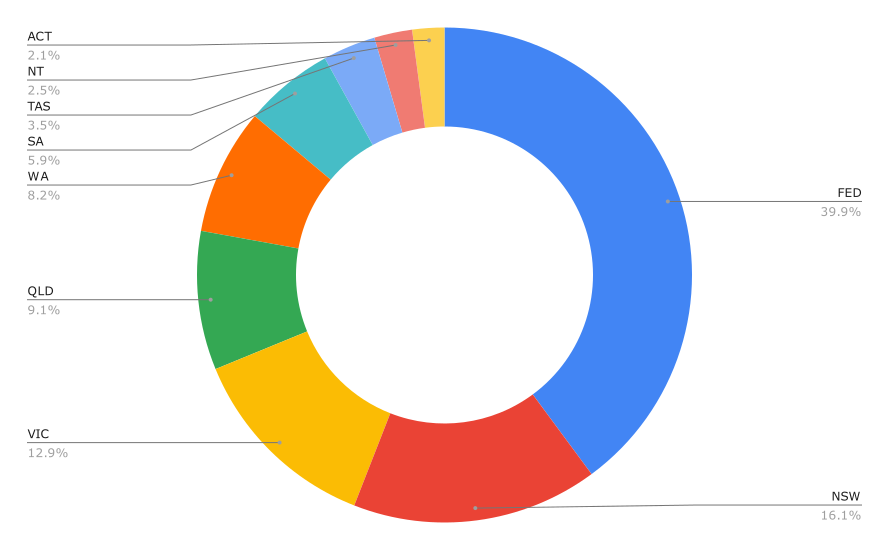
Have you ever wondered how popular Drupal is in your local state and at the Australian Federal Government level? This blog post will help to answer that question, using open source tooling. The hope is that you gain some insight to the relative popularity of Drupal and appreciate more the impact you and Drupal have in Australia.
As this blog post is a follow up, you can also now start to see trends (data is around 13 months newer than the last time I did this).
Disclaimer:
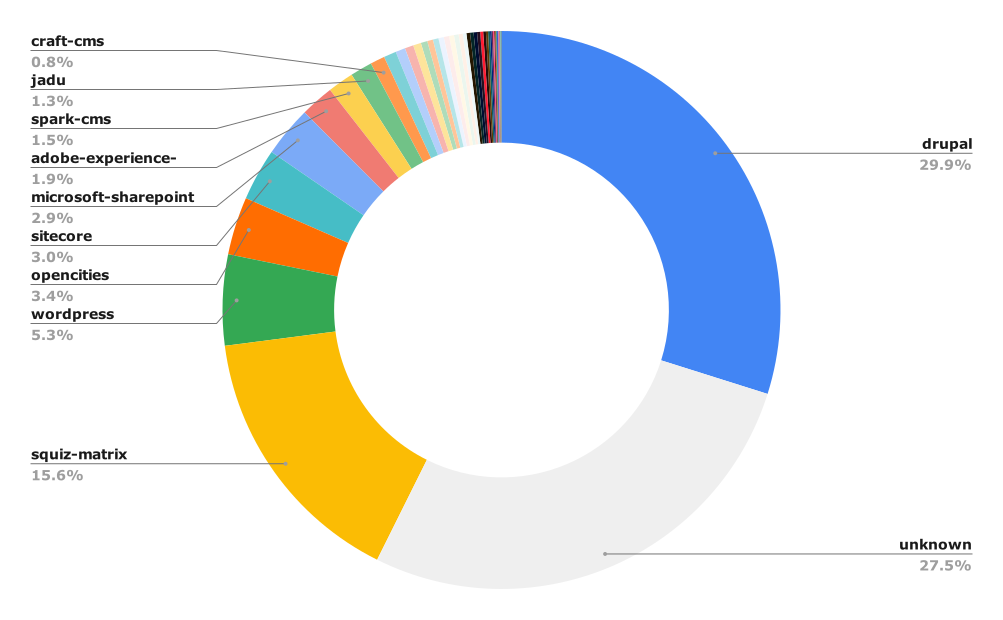
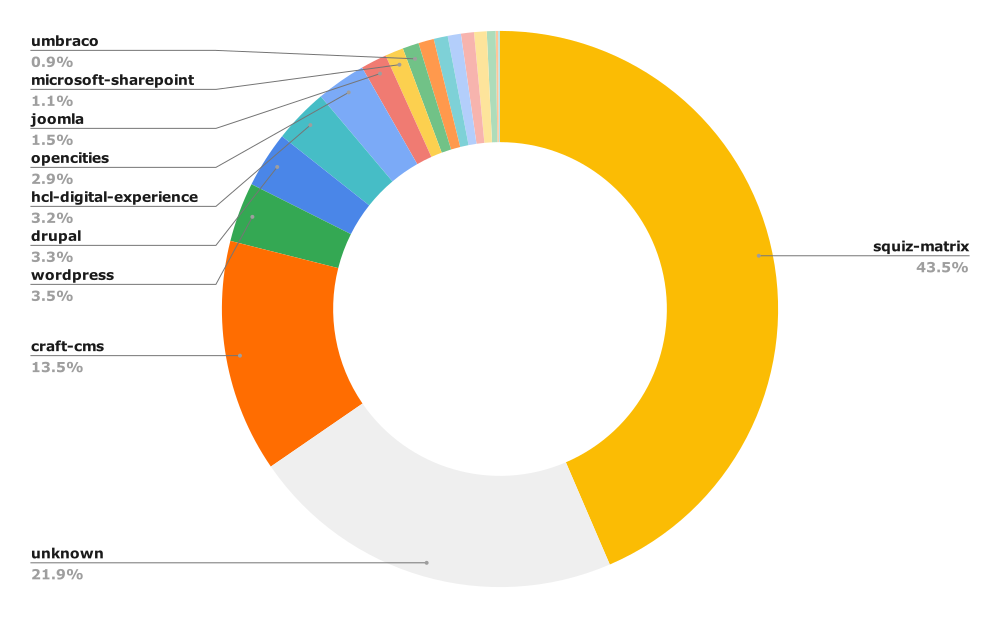
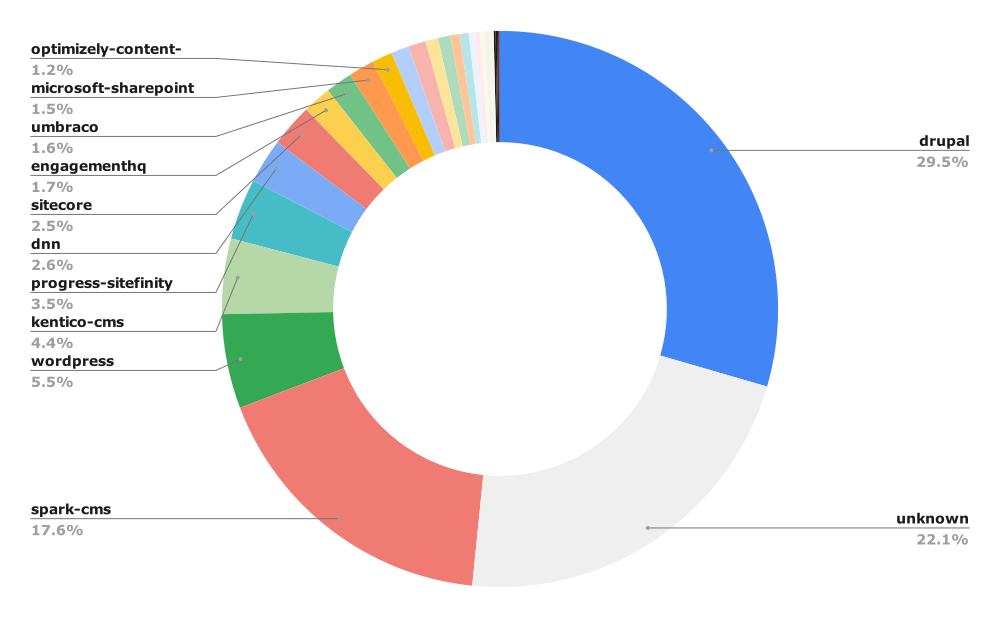
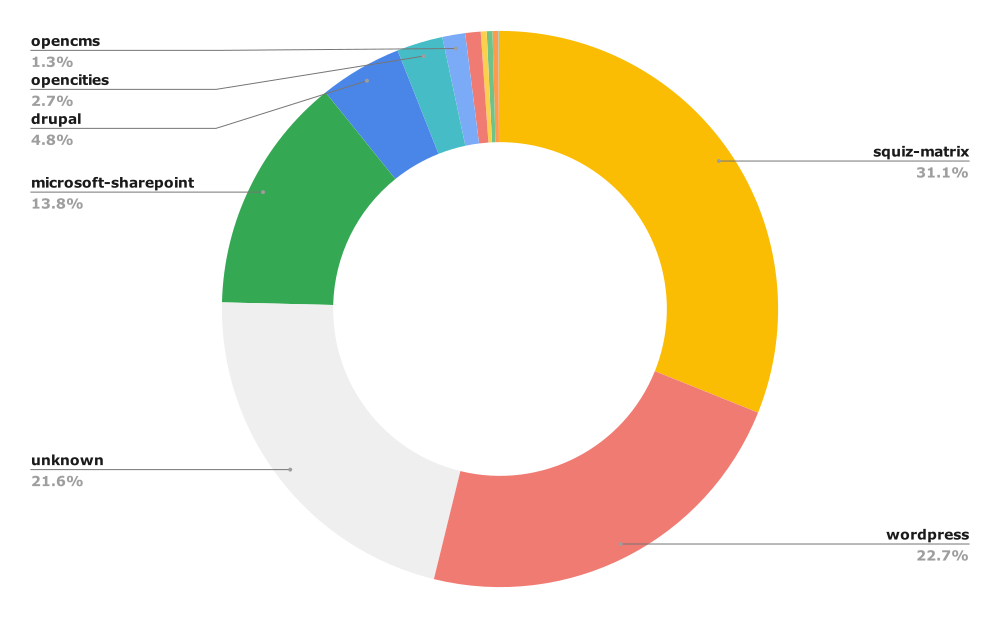
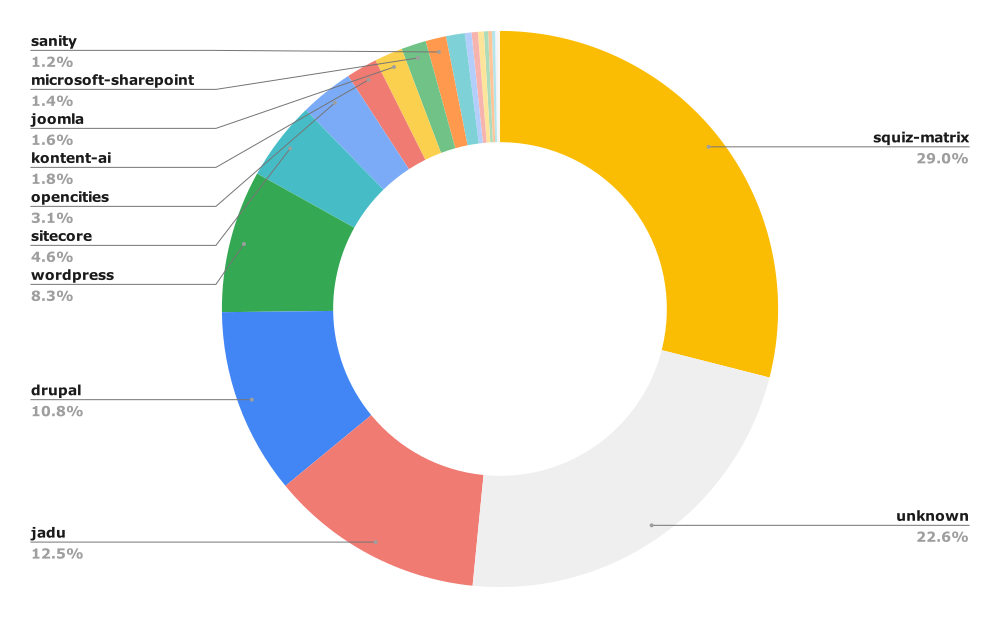
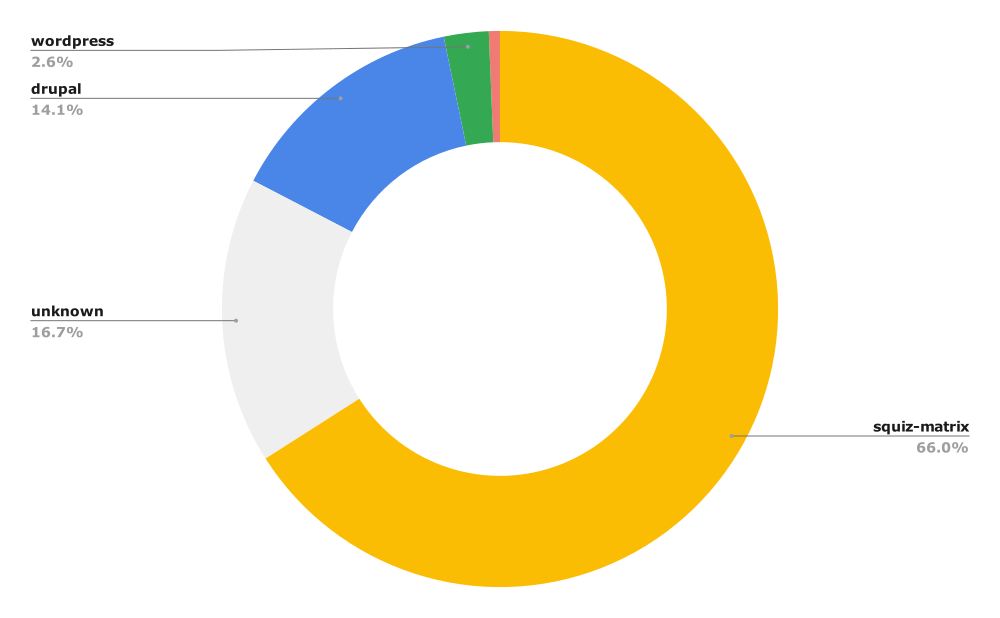
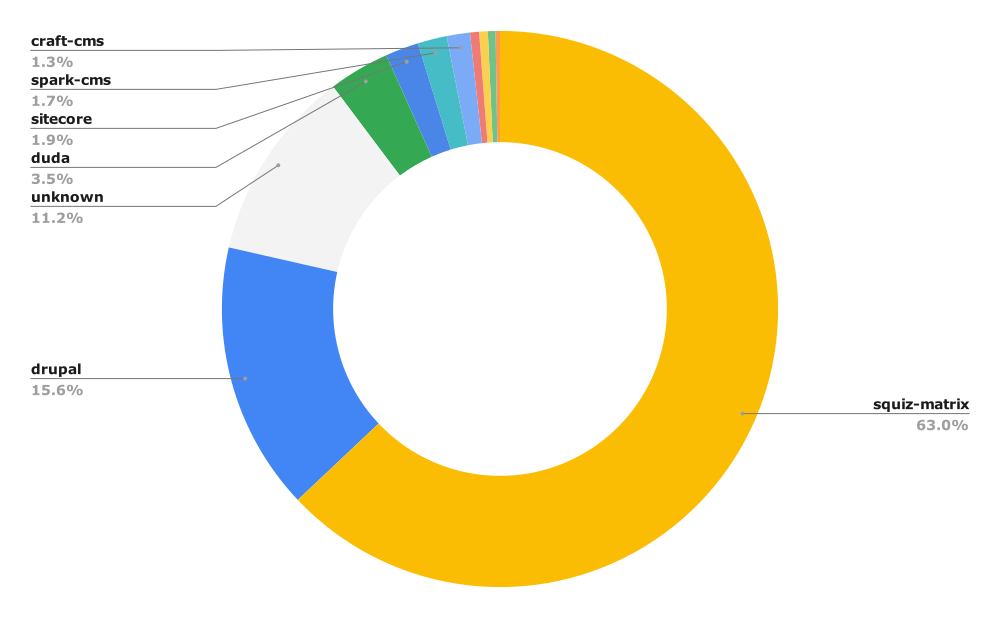
*.gov.au domains considered (some Government sites use other TLDs)Programmes like GovCMS are having an impact here. Also interesting that if you are not using Drupal, the chances are you have written something entirely custom.
*.vic.gov.auThe Single Digital Presence (SDP) programme makes a mark in Victoria.
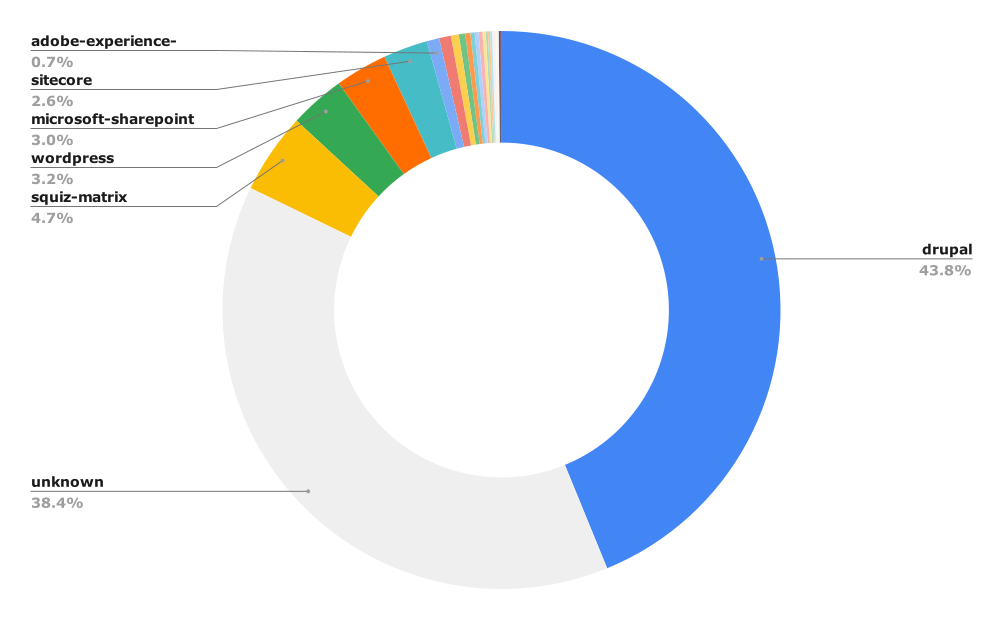
*.nsw.gov.auLarge Drupal sites like https://www.nsw.gov.au/ and https://www.service.nsw.gov.au/ help to make Drupal dominant in NSW.
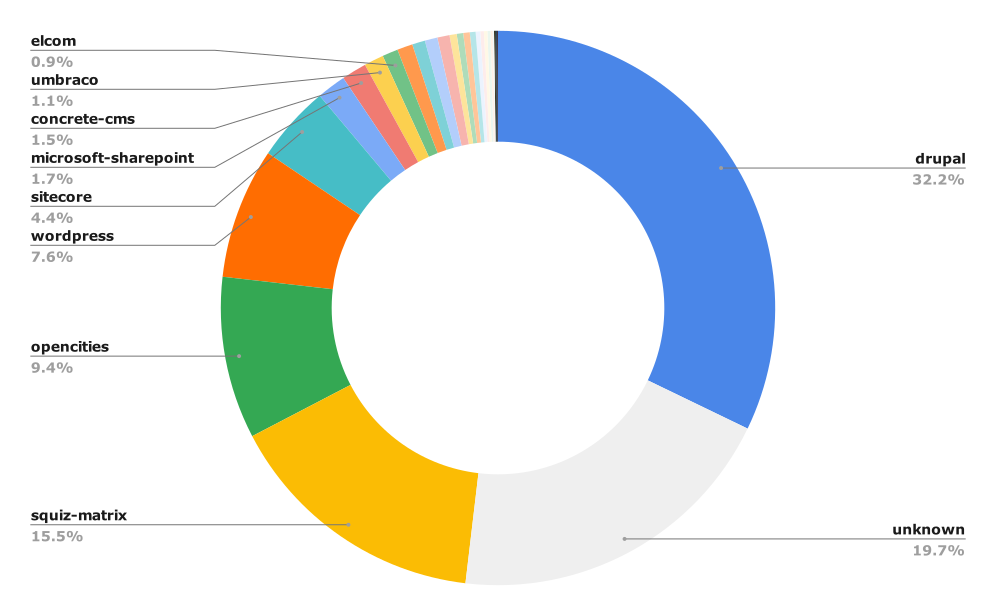
*.sa.gov.auSquiz Matrix increasing in market share ↑5.4% over 2022. There is a clear state led mandate here.
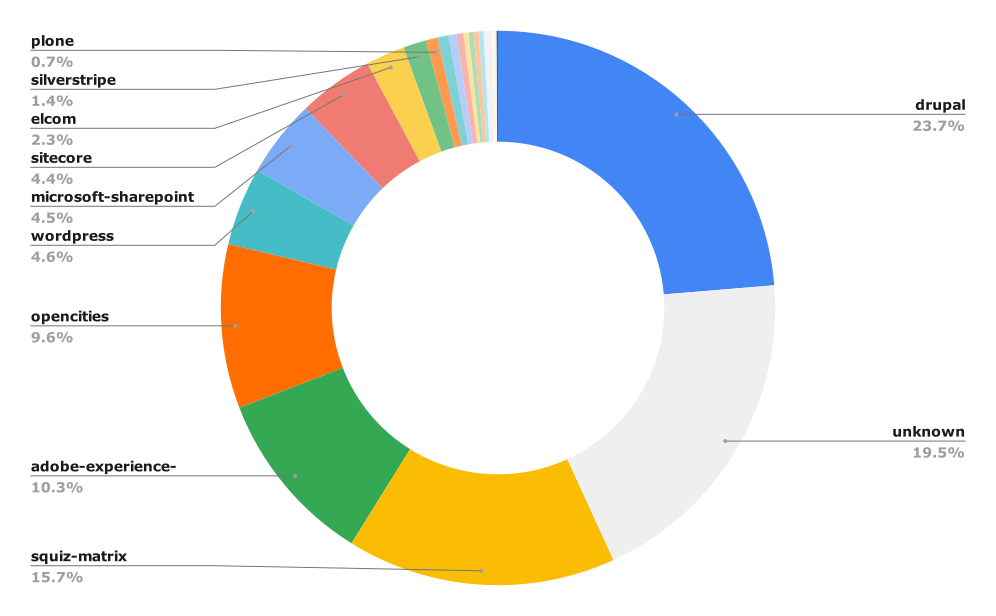
*.wa.gov.auA lot of sites this time around are now identified (decrease of ↓30.8% of unknown sites). Drupal also increased market share by ↑9.9%.
*.tas.gov.auThe lowest usage of Drupal for any Australian state or territory and the highest percentage of Wordpress.
*.qld.gov.au*.act.gov.auThe highest percentage of Squiz compared to any other Australia state or territory.
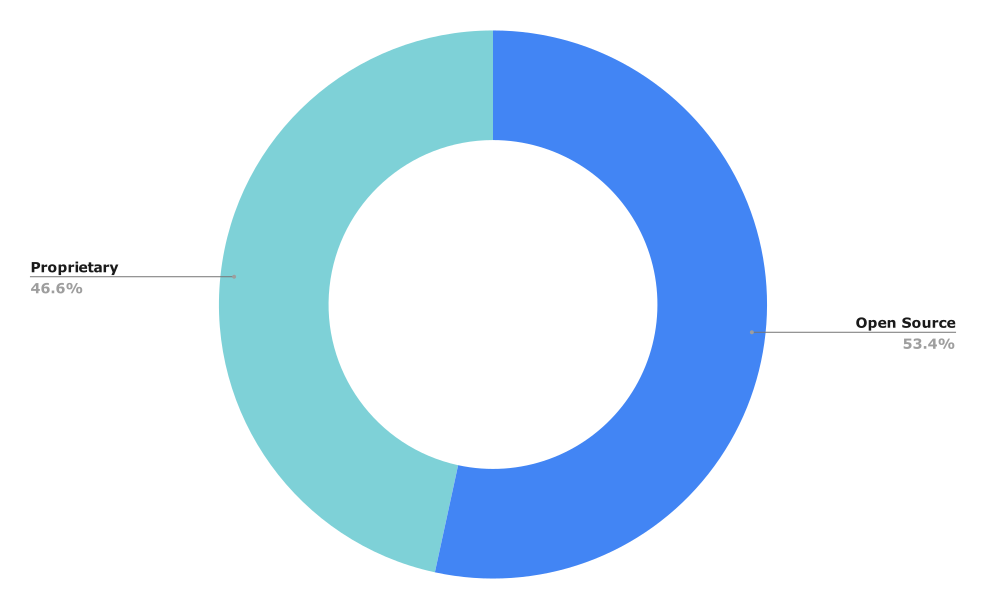
*.nt.gov.auFor the CMS’ that can be identified, splitting them into 2 categories, OSS and Proprietary. OSS is determined on whether the source code is freely available, and there is a licence that allows me to run it without paying someone.
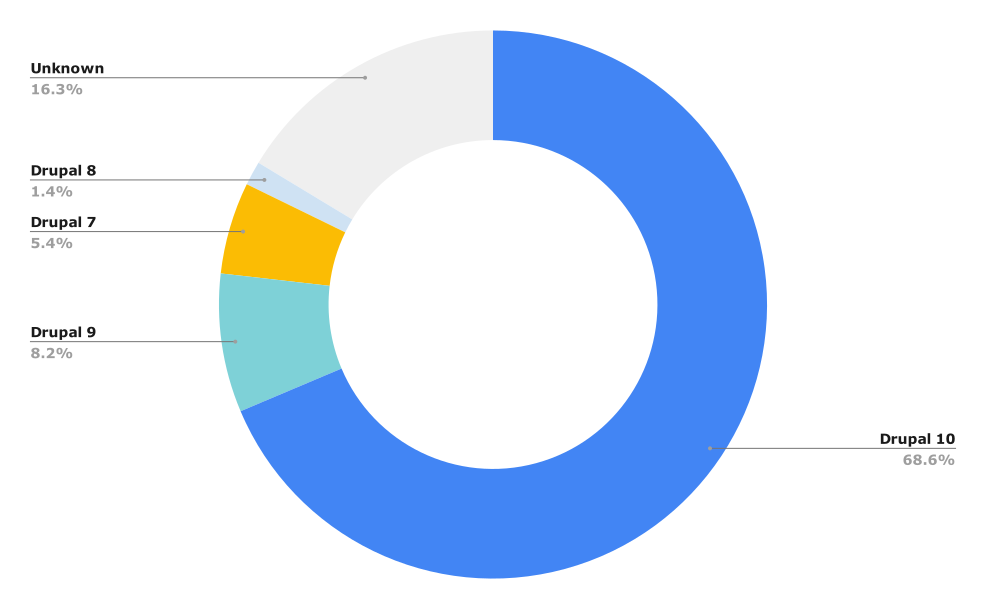
For sites reporting as Drupal, Drupal 10 is the most popular. Still 5.4% of Drupal sites running Drupal 7 to which will be End-of-Life (EOL) in early 2025.
This is weighted by total score, broken down by federal/state/territory.
“Drupal powers ~29.9% of all digital experiences that you use in the Australian government. This is↑2.7% compared to 2022”
“Relative to the growth of Australian government sites, Drupal adoption is growing faster”

“Squiz Matrix is the top contender with 15.6%, and has a clear state lead mandate in 5 states/territories. This is↑3.5% compared to 2022”
“Drupal 7 usage dropped from 15.8% in 2022 to 5.4% in 2024. This is↓65.8% compared to 2022. Most popular Drupal 7 site is https://www.sl.nsw.gov.au/”
Also after my presentation I got to meet the team behind the State Library of NSW, and they advised that they are due to upgrade to Drupal 10 anytime soon.
83 sites with HTTP only (a drop of ↓46 since 2022)
|
Domain |
CMS |
Page Rank |
Score |
|
unknown |
5.63 |
8614 |
|
|
unknown |
4.68 |
1867 |
|
|
microsoft-sharepoint |
4.68 |
1867 |
|
|
hcl-notes |
4.6 |
1642 |
|
|
unknown |
4.56 |
1539 |
14 sites with ww[0-9] in the domain name (a drop of ↓5 since 2022)
|
Domain |
CMS |
Page Rank |
Score |
|
drupal |
5.3 |
5065 |
|
|
unknown |
4.99 |
3075 |
|
|
unknown |
4.59 |
1615 |
|
|
unknown |
4.53 |
1467 |
|
|
unknown |
4.51 |
1420 |
I think this is often used like a form of poor mans version control, often archiving the previous version of the site. For some reason it is archived publicly.
If you want to make your own visualisations of the data, or even just do random queries “how popular is Spark CMS in Western Australia”, you can download a CSV from https://bit.ly/dsau2024csv. Slides are https://bit.ly/dsau2024.
I found a lot of software running in certain states, so I upstreamed some changes to better detect these software packages:
I am keen to hear feedback on this data, and what can be done to improve the scoring. Also, if you can help fill in some of the ‘unknown’ data, let me know, I am happy to craft another PR into WebAppAnalyzer.
I am happy to announce the first release of poke-elf, version 1.0.
The tarball poke-elf-1.0.tar.gz is now available at
https://ftp.gnu.org/gnu/poke/poke-elf-1.0.tar.gz.
> poke-elf (https://jemarch.net/poke-elf) is a full-fledged GNU poke pickle for editing ELF object
> files, executables, shared libraries and core dumps. It supports
> many architectures and extensions.
>
> This pickle is part of the GNU poke project.
>
> GNU poke (https://jemarch.net/poke) is an interactive, extensible
> editor for binary data. Not limited to editing basic entities such
> as bits and bytes, it provides a full-fledged procedural,
> interactive programming language designed to describe data
> structures and to operate on them.
Please send us comments, suggestions, bug reports, patches,
questions, complaints, bitcoins, or whatever, to poke-devel@gnu.org.
Happy ELF poking!
—
Jose E. Marchesi
Frankfurt am Main
30 March 2024