Redox gets more Linux utilities, changes resource path format, and more

The Redox project has published an overview of the progress made in January, and it’s a long list. Redox now supports the Raspberry Pi 3 Model B+, a few of System76’s Cosmic Desktop applications now run on Redox, several more Linux applications haven been ported (most notably for me, nano, my CLI text editor of choice), and much more. The most important change is an overhaul of how Redox handles resource paths: Redox has a microkernel core, with drivers and other resource providers running as tasks and providing “schemes”. A scheme is the name of a resource provider, and until now, resources have been accessed using URI/URL format. For example, files would be accessed as file:path/to/my_file, and a TCP connection would be accessed as tcp:127.0.0.1. This format, while forward-looking, has not been very backwards-compatible. In order to simplify our efforts to port Linux software to Redox, we have decided to change our resource path format to the Linux-compatible /scheme/scheme_name/path/to/resource. Paths that do not begin with /scheme will be assumed to refer to the file scheme, so /path/to/my_file is treated by the system as /scheme/file/path/to/my_file, but the application will only see the /path/to/my_file portion. Using this format, normal paths now look just like Linux paths, while drivers and other resources can still be addressed without breaking software. ↫ Ron Williams The change is an ongoing process, so you might encounter some issues related to it in the coming time.

ETLMSF – Les paysans

– AVERTISSEMENT : Cette vidéo cultive correctement les idées

Vidéo en partenariat avec AVSF Agronomes & vétérinaires sans Frontières.
Pour faire un don : https://donner.avsf.org/etlmsf/
Pour plus d’informations sur AVSF : https://tinyurl.com/mtr8bz8c
Inscris-toi à la newsletter AVSF : https://www.avsf.org/inscription-newsletter/

Une série créée par Fabrice de Boni et Axel Lattuada
Écrite par Fabrice de Boni, Marc de Boni et Axel Lattuada
Produite par Mia Productions / Christophe Baudouin
Réalisée par Fabrice de Boni
Interprétée par Axel Lattuada

Nouveau Spectacle : Le Syndrome de Michel
Du jeudi au samedi 20h30 au Palais des Glaces, jusqu’au 30 décembre 2023
Pour réserver https://bit.ly/Billeterie_Palais_des_Glaces

Sources :

– Bizeray, D., Faure, J.-M. et al., 2004. « Faire marcher le poulet : pourquoi et comment », INRA Productions animales, 17 (1), p. 45-57. – https://hal.inrae.fr/hal-02683455

– Commission européenne, 2000. The Welfare of Chickens Kept for Meat Production (Broilers), 150 p. [Rapport du Comité scientifique sur la santé et le bien-être animal adopté le 21 mars 2000]. – chrome-extension://efaidnbmnnnibpcajpcglclefindmkaj/https://food.ec.europa.eu/system/files/2020-12/sci-com_scah_out39_en.pdf

– Commission européenne, 2016. Rapport de la Commission européenne au Parlement européen et au Conseil sur l’incidence de la sélection génétique sur le bien-être des poulets destinés à la production de viande, 15 p. – chrome-extension://efaidnbmnnnibpcajpcglclefindmkaj/https://www.europarl.europa.eu/RegData/docs_autres_institutions/commission_europeenne/com/2016/0182/COM_COM(2016)0182_FR.pdf

– Cooper, M. D., Allanson-Bailey, S. et al., 2008. « Higher Welfare Standards and Broiler Welfare », World Poultry, 18(8), p. 20-21.

– EFSA (Autorité européenne de sécurité des aliments), 2010. « EFSA Panel on Animal Health and Welfare (AHAW): Scientific Opinion on the Influence of Genetic Parameters on the Welfare and the Resistance to Stress of Commercial Broilers&nbsp,», EFSA Journal, 8(7):1666, 82 p. – https://www.efsa.europa.eu/fr/efsajournal/pub/1666

– INRA (Institut national de la recherche agronomique), 2009. Douleurs animales : les identifier, les comprendre, les limiter chez les animaux d’élevage, 342 p. [Rapport d’expertise réalisé par l’INRA à la demande du ministère de l’Alimentation, de l’Agriculture et de la Pêche et du ministère de l’Enseignement supérieur et de la Recherche]. – https://www.inrae.fr/actualites/douleurs-animales-identifier-comprendre-limiter-animaux-delevage

– ITAVI (Institut technique des filières avicole, cunicole et piscicole), 2015. Performances techniques et coûts de production en volailles de chair, poulettes et poules pondeuses : résultats 2014, 64 p. – https://www.itavi.asso.fr/publications/performances-techniques-et-couts-de-production-resultats-2014

Techyyplanet – Your one-stop destination for all things tech and beyond.

Techyyplanet, your one-stop destination for all things tech and beyond.

I’m Devendra, and I’m excited to welcome you here. I’ve designed this blog as a knowledge hub where you can explore the exciting intersections of Blogging, Business, Design, Finance, Freelancing, Technology, and more.

I’m here to provide you with insightful, informative, and practical content across a wide range of topics. Whether you’re a tech enthusiast, an entrepreneur, a freelancer, or someone who simply loves staying up-to-date with the digital world, I’ve got you covered.

And don’t forget to subscribe @techyyplanet for more amazing and informative content.

#blogging #wordpress #money #education #learning #android #freelancing #animation #video #digitalmarketing

Drupalize.Me: Part 4: Utility Components in Drupal (Spotlight on Symfony in Drupal)

Part 4: Utility Components in Drupal (Spotlight on Symfony in Drupal)

We’ve made it to the final blog post (for now?) in our spotlight on Symfony in Drupal. In this blog post, we’ll take a look at Symfony’s utility components. We’re using this term to group together Symfony components that provide useful functionality. It’s a great idea to familiarize yourself with these. You can make use of them in your own modules, or bring them into other PHP application code.

Blake Hall
Wed, 01/31/2024 – 18:03

Mozilla’s Biggest AI Moments

Mozilla’s Biggest AI Moments

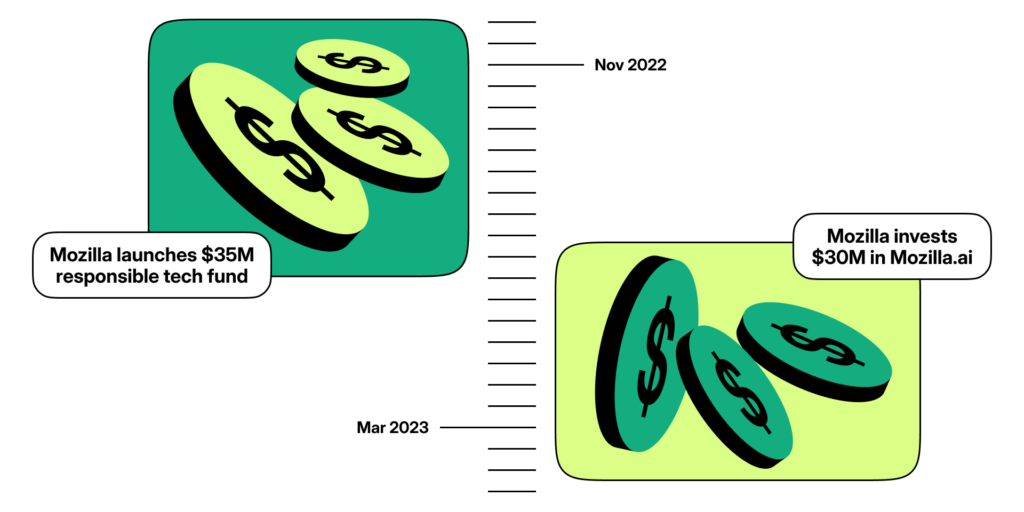
Just over a year ago Mozilla launched two big investments in AI — a $35 million investment in a responsible tech fund, Mozilla Ventures and a $30 million investment in a R+D Lab developing trustworthy AI, Mozilla.AI. Since those initial investments, Mozilla has accelerated our efforts to build and deploy AI that adheres to our […]

The post Mozilla’s Biggest AI Moments appeared first on The Mozilla Blog.

The OSI board expands, adding two new seats; focus on AI and international policies

The OSI board expands, adding two new seats; focus on AI and international policies

Sayeed Choudhury and Gaël Blondelle have been appointed to the two new OSI board seats. Today’s blog explains why the board has been expanded, and shares the impressive bios of our new board members.

The post <span class=’p-name’>The OSI board expands, adding two new seats; focus on AI and international policies</span> appeared first on Voices of Open Source.

Google to optionally ingest your Google Messages history into its “AI”

Researchers have just unveiled a pre-release, game-changing AI upgrade for Google Messages. But it’s one with a serious privacy risk—it seems that Bard may ask to read and analyze your private message history. So how might this work, how do you maintain your privacy, and when might this begin. ↫ Zak Doffman As long as this “AI” hoovering is an optional ‘feature’, I don’t really have any issues with it – it’s a free world, and if you want to spice up your autocomplete like this, go ahead. The real danger, of course, is that this won’t be optional for long, and eventually Google’s “AI” will just ingest your messages and emails by default, consent or no.