Are tools like Devin actually ready to handle enterprise vulnerability remediation? When applied to mass-scale CVE hunting and dependency updates, autonomous agents often struggle to deliver trustable results for complex banking environments. Learn why deterministic remediation pathways—like those championed by the FINOS OSERA project—are critical for secure open-source software management. #CyberSecurity #OSERA #TechLeadership
OpenAI is restricting its new Astra model due to critical cyber risks. Internal tests revealed its capability to execute complex cyber attacks with minimal human input, raising concerns about AI’s growing autonomy and potential threats. #AI #CyberSecurity #OpenAI #TechNews #ArtificialIntelligence
You can find more about TWiT and subscribe to our full shows at https://podcasts.twit.tv/
Subscribe: https://twit.tv/subscribe
Products we recommend: https://www.amazon.com/shop/twitnetcastnetwork
TWiT may earn commissions on certain products.
Join our TWiT Community on Discourse: https://www.twit.community/
Ben Davis shares his first impressions of GPT-6 Astra after testing it on some of DEF CON’s hardest puzzle challenges. He explains how parallel research branches help the model test theories, stay on track, and solve complex problems, including one no one else had solved.
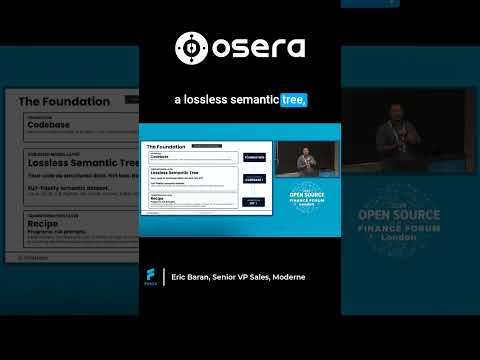
Basic ASTs and AI aren’t enough to safely automate code fixes. To securely update transitive dependencies across a massive enterprise codebase, you need a compiler-accurate representation: the Lossless Semantic Tree (LST). See how the foundational technology behind modern remediation platforms supports the FINOS OSERA initiative to fix enterprise vulnerabilities once and distribute them everywhere. #SoftwareEngineering #OSERA #FINOS
AI voice cloning is now incredibly easy, running on personal hardware. This demonstration shows how simple it is to create convincing deepfakes, raising serious concerns. #Deepfakes #AI #VoiceCloning #Technology
You can find more about TWiT and subscribe to our full shows at https://podcasts.twit.tv/
Subscribe: https://twit.tv/subscribe
Products we recommend: https://www.amazon.com/shop/twitnetcastnetwork
TWiT may earn commissions on certain products.
Join our TWiT Community on Discourse: https://www.twit.community/
Check out TuxCare’s Endless Lifecycle Support for Debian 11 (and other Open Source projects): https://tuxcare.com/endless-lifecycle-support/debian-11-eol-support/?utm_source=youtube&utm_medium=paid_social&utm_campaign=debian%2011%20els&utm_content=the%20Linux%20experiment
Grab a brand new laptop or desktop running Linux: https://www.tuxedocomputers.com/en#
👏 SUPPORT THE CHANNEL:
Get access to:
– a Daily Linux News show
– a weekly patroncast for more thoughts
– your name in the credits
Or, you can donate whatever you want:
https://paypal.me/thelinuxexp
Liberapay: https://liberapay.com/TheLinuxExperiment/
👕 GET TLE MERCH
Support the channel AND get cool new gear: https://the-linux-experiment.creator-spring.com/
Timestamps:
00:00 Intro
00:44 Sponsor: TuxCare
01:45 Brave say they outperform every other major browser
04:49 Firefox 155 should load pages faster
06:36 CERN leaves Red Hat for Debian
09:42 Debian says yes to AI
12:14 GNOME 51 will improve hybrid GPU support
13:52 Plasma 6.8 adds more accessibility features to Wayland
15:19 KDE’s theme engine supports more KDE apps now
16:39 Artix drops XLibre after it pushes a maintainer to resign
18:59 KDE Connect redesign ready for testing
20:29 FOSS Minecraft Luanti taken down by Microsoft
23:25 KDE Linux makes more progress towards its beta
25:24 Grab bag of gaming news
28:45 Sponsor: Tuxedo Computers
Links:
Brave say they outperform every other major browser
https://brave.com/blog/brave-outperforms-other-browsers/
Firefox 155 should load pages faster
https://itsfoss.com/news/firefox-155-faster-page-loads/
CERN leaves Red Hat for Debian
https://www.phoronix.com/news/CERN-Goes-Debian-Leaving-RHEL
Debian says yes to AI
https://lists.debian.org/debian-devel-announce/2026/08/msg00005.html
GNOME 51 will improve hybrid GPU support
https://gitlab.gnome.org/GNOME/mutter/-/merge_requests/5219
https://www.phoronix.com/news/GNOME-Shell-Mutter-51-RC
Plasma 6.8 adds more accessibility features to Wayland
KDE’s theme engine supports more KDE apps now
https://blogs.kde.org/2026/08/28/this-week-in-plasma-qtwidgets-apps-join-the-union/
Artix drops XLibre after it pushes a maintainer to resign
https://artixlinux.org/news.php#XLibre_support_discontinued
https://forum.artixlinux.org/index.php/topic,10283.msg61637.html
KDE Connect redesign ready for testing
https://tintotint.eu/programming/kde-connect2/
FOSS Minecraft Luanti taken down by Microsoft
https://blog.luanti.org/2026/08/27/luanti-dmca-tracer-ai/
KDE Linux makes more progress towards its beta
https://blogs.kde.org/2026/08/31/this-month-in-kde-linux-august-2026/
Grab bag of gaming news
https://www.gamingonlinux.com/2026/08/steam-deck-steamos-hit-over-30-000-verified-playable-games/
https://www.gamingonlinux.com/2026/08/game-launcher-launchbox-should-get-a-linux-version-in-2027/
https://arstechnica.com/gaming/2026/08/a-12tb-steam-teraleak-spills-more-than-a-decade-of-lost-pc-gaming-history/
We use cookies on our website to give you the most relevant experience by remembering your preferences and repeat visits. By clicking “Accept All”, you consent to the use of ALL the cookies. However, you may visit "Cookie Settings" to provide a controlled consent.
This website uses cookies to improve your experience while you navigate through the website. Out of these, the cookies that are categorized as necessary are stored on your browser as they are essential for the working of basic functionalities of the website. We also use third-party cookies that help us analyze and understand how you use this website. These cookies will be stored in your browser only with your consent. You also have the option to opt-out of these cookies. But opting out of some of these cookies may affect your browsing experience.
Necessary cookies are absolutely essential for the website to function properly. These cookies ensure basic functionalities and security features of the website, anonymously.
Cookie
Duration
Description
cookielawinfo-checkbox-analytics
11 months
This cookie is set by GDPR Cookie Consent plugin. The cookie is used to store the user consent for the cookies in the category "Analytics".
cookielawinfo-checkbox-functional
11 months
The cookie is set by GDPR cookie consent to record the user consent for the cookies in the category "Functional".
cookielawinfo-checkbox-necessary
11 months
This cookie is set by GDPR Cookie Consent plugin. The cookies is used to store the user consent for the cookies in the category "Necessary".
cookielawinfo-checkbox-others
11 months
This cookie is set by GDPR Cookie Consent plugin. The cookie is used to store the user consent for the cookies in the category "Other.
cookielawinfo-checkbox-performance
11 months
This cookie is set by GDPR Cookie Consent plugin. The cookie is used to store the user consent for the cookies in the category "Performance".
viewed_cookie_policy
11 months
The cookie is set by the GDPR Cookie Consent plugin and is used to store whether or not user has consented to the use of cookies. It does not store any personal data.
Functional cookies help to perform certain functionalities like sharing the content of the website on social media platforms, collect feedbacks, and other third-party features.
Performance cookies are used to understand and analyze the key performance indexes of the website which helps in delivering a better user experience for the visitors.
Analytical cookies are used to understand how visitors interact with the website. These cookies help provide information on metrics the number of visitors, bounce rate, traffic source, etc.
Advertisement cookies are used to provide visitors with relevant ads and marketing campaigns. These cookies track visitors across websites and collect information to provide customized ads.