
Video by The Linux Foundation via YouTube
Sponsored by Harness
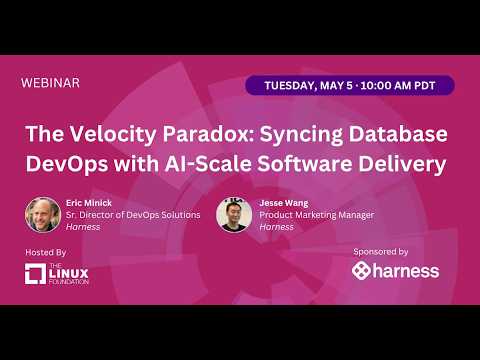
AI has supercharged coding speed, but it has exposed critical weaknesses in the downstream delivery pipeline. The Harness State of DevOps Modernization 2026 report shows that, while AI-assisted developers are shipping code 45% faster, 69% of frequent AI users report more frequent deployment problems, and average incident recovery times have climbed to 7.6 hours. This is the "Velocity Paradox.”
The culprit? A fragmented pipeline where application code moves at machine speed, while database schemas and infrastructure remain trapped in manual, siloed workflows. To survive the AI era, organizations must move toward a unified pipeline that treats the database as a first-class citizen of Continuous Delivery.
In this session, we’ll discuss how to:
– Standardize Across Environments: Deploy application and database changes consistently from dev to staging to production, with the visibility and governance required to scale safely.
– Scale with Agentic Workflows: Move beyond basic scripts. Use AI-driven agents to safely author schema migrations and automate the complex troubleshooting that currently inflates MTTR.
– Implement "Golden Paths" for Data: Enable developer self-service while enforcing rigid security and compliance using OPA (Open Policy Agent) "baked into" the pipeline.
– Bridge the Trust Gap: Learn how to apply "trust but verify" guardrails to AI-generated code and database changes to reduce the 51% increase in code quality issues seen by high-velocity teams.