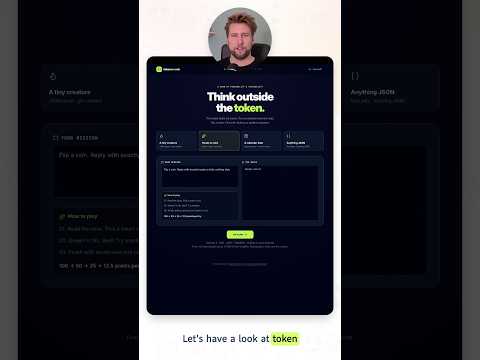
Leo’s Pick of the Week – Absurdly Optimized Pancakes

Leo's Pick of the Week - Absurdly Optimized Pancakes

Video by TWiT Tech Podcast Network via YouTube
Leo's Pick of the Week - Absurdly Optimized Pancakes

Leo’s Pick of the Week – Absurdly Optimized Pancakes
Leo’s Pick of the Week – Absurdly Optimized Pancakes! Ever wanted to calculate pancake perfection? This site does it all. From CO2 kinetics to your fridge contents. Time to make some next-level pancakes! #FoodTech #Pancakes #Optimization #LifeHacks #WebDesign #Foodie

Source

Ubuntu 26.04 LTS vs Linux Mint 22.3 – The Epic Showdown of 2026! (NEW)

Ubuntu 26.04 LTS vs Linux Mint 22.3 - The Epic Showdown of 2026! (NEW)

Video by Linux Tex via YouTube
Ubuntu 26.04 LTS vs Linux Mint 22.3 - The Epic Showdown of 2026! (NEW)

⚡ Personal ChatGPT coaching: LIVE 1 on 1 With Me
In just 3 hours, go from beginner to PRO. Book Now!
https://linuxtex.gumroad.com/l/chatgpt-mastery

Ubuntu 26.04 LTS vs Linux Mint 22.3 — the biggest Linux distro battle of 2026! In this in-depth comparison I put Ubuntu 26.04 LTS "Resolute Raccoon" head-to-head against Linux Mint 22.3 "Zena" across every category that actually matters: user interface, performance and RAM usage, software availability, the Snap vs Flatpak debate, gaming, stability, drivers, and installation. If you’re trying to decide which Linux distro to install in 2026, this is the only comparison you need.

⬇️ DOWNLOAD LINKS

Ubuntu 26.04 LTS:
https://ubuntu.com/download/desktop

Linux Mint 22.3:
https://linuxmint.com/

Ubuntu 26.04 ships with GNOME 50, kernel 7.0, Wayland, and Snap-first software, while Linux Mint 22.3 runs the familiar Cinnamon 6.6 desktop on a rock-solid Ubuntu 24.04 base with no Snap by default. We test idle RAM, boot times, app launch speed, old vs new hardware, Steam and Proton gaming, NTSYNC, NVIDIA drivers, Update Manager, Timeshift, and more — with a running scoreboard all the way to the final verdict.

Whether you’re a complete Linux beginner switching from Windows, a gamer, a developer, or a long-time Linux desktop user, this video helps you pick the right distro for YOUR hardware and workflow.

👍 If this comparison helped you, smash that LIKE button and SUBSCRIBE to LinuxTex for more Linux distro reviews, tutorials, and tips. Drop a comment below — Team Ubuntu or Team Mint?

#Ubuntu #LinuxMint #Linux #Ubuntu2604 #LinuxMint223 #GNOME #Cinnamon #LinuxDistro #OpenSource #LinuxGaming #Snap #Flatpak #DistroComparison #LinuxForBeginners #LinuxTex #Ubuntu2026 #BestLinuxDistro #SwitchToLinux #LinuxDesktop #Proton

Source

Open Source Roundup: R Meetups, Debugging & LLM Tips

Open Source Roundup: R Meetups, Debugging & LLM Tips

Community Events Social Coworking & Office Hours: SORTEE (open science), Vale & text linting, and R debugging sessions offer collaborative coding and peer learning. Rencontres R 2026: The annual French R conference will be held in Nantes. Save the date! Tech & Tools FreeBSD Kernel Bug: A privilege escalation exploit (‘Bumsrakete’) grants root access; patch … Read more

Open-Source AI: Promise & Peril for Climate, Dev

Open-Source AI: Promise & Peril for Climate, Dev

Analysis Open-source AI is emerging as a double-edged sword: it can accelerate climate action and sustainable development, but without careful governance, it risks exacerbating inequality. The UK is aggressively betting on open-source AI to become a global leader, while researchers warn that open models could lead to misuse. Meanwhile, Microsoft is releasing new vulnerability tools … Read more

Open Source Digest: AI, Privacy, and KDE Customization

Open Source Digest: AI, Privacy, and KDE Customization

Insight-First Analysis This week’s digest highlights three major themes: the evolving role of AI in open source development, the tension between security and privacy in telecom regulation, and the vibrant ecosystem of desktop customization. The OpenAI Codex browser debugging demo shows how AI can now directly inspect web apps via Chrome DevTools Protocol, reducing manual … Read more

People love meetings

People love meetings

Video by OpenProject | Open Source Project Management via YouTube
People love meetings

People love meetings. Or at least, they do in OpenProject.

When we asked our team about their favorite feature in OpenProject, many of them chose the Meetings module. 👥💬 It has grown and evolved significantly over time and continues to improve with the latest 17.5 release.

While our team is working on a new tutorial video to help you get the most out of Meetings, we’d like to share why so many of us love this feature. Hear from some of our team members about what makes Meetings their favorite part of OpenProject.

Source

Debug web apps with browser use in Codex

Debug web apps with browser use in Codex

Video by OpenAI via YouTube
Debug web apps with browser use in Codex

Codex can now use the Chrome DevTools Protocol (CDP) in Browser Use to inspect console logs, runtime errors, local storage, applied styling, network traffic, and performance profiles while working on web applications.

In this demo, Codex investigates a slow chat app by profiling interactions and inspecting network requests, then fixes the issues and supports the changes with clear measurements.

To use this functionality, enable Developer mode in the Browser settings of your Codex app and approve CDP access when Codex starts inspecting a website.

Learn more here: https://developers.openai.com/codex/app/browser#developer-mode

Chapters:
00:00 CDP support in Browser Use
00:23 Enable Developer Mode and approve access
00:37 Debugging a slow chat app
00:56 Profiling real bottlenecks
01:15 More in-depth browser capabilities

Source

How MCP Unlocks Smarter Developer Workflows, Sajeetharan Sinnathurai, #FOSSASIA Summit 2026

How MCP Unlocks Smarter Developer Workflows, Sajeetharan Sinnathurai, #FOSSASIA Summit 2026

Video by FOSSASIA via YouTube
How MCP Unlocks Smarter Developer Workflows, Sajeetharan Sinnathurai, #FOSSASIA Summit 2026

Developers often know what they want to do but still spend time translating intent into API calls, queries, and portal clicks. The **Model Context Protocol (MCP)** helps bridge that gap by enabling AI agents to interact with tools and systems through natural language.

This session explores how MCP can streamline developer workflows, automate repetitive tasks, and reduce friction in day-to-day engineering. Through a real-world example, we’ll demonstrate an MCP server for Azure Cosmos DB, showing how AI agents can perform database operations directly from conversational prompts.

We’ll also showcase integration with Microsoft Foundry and an Angular application using an Angular Agent Kit, illustrating how MCP-powered experiences can be embedded into modern applications. Perfect for developers interested in AI agents, MCP, developer productivity, and next-generation application workflows.

FOSSASIA Summit 2026 held in Bangkok, is Asia’s leading Open Source tech conference featuring sessions on #AI, #Cloud, #DevOps, #Open Hardware, #Security, #Web #Mobile Technologies, #Web3, and #Databases. Learn more: http://summit.fossasia.org

Session Slide: https://eventyay.com/ev/88882f3e/talk/76SKFBY0K1ZD/

#FOSSASIA #FOSSASIASummit #opensource #FOSS

Source

Operationalizing Agentic AI Safety & Evaluation for Multi-Agent Financial Systems

Operationalizing Agentic AI Safety & Evaluation for Multi-Agent Financial Systems

Video by FINOS via YouTube
Operationalizing Agentic AI Safety & Evaluation for Multi-Agent Financial Systems

Vincent Caldeira (Field CTO at Red Hat) and Valentina Rodriguez Sosa (Principal Architect at Red Hat) map out a comprehensive, technical architecture for deploying multi-agent AI safely into production within regulated financial environments. They cover evaluation-driven development (EDD), open telemetry trace analysis, guardrailing economics, and automated red-teaming.

🇬🇧 Join us in London! Catch the latest on Agentic AI and DevSecOps at OSFF London on June 25, 2026: https://hubs.ly/Q041YV9Z0 (Use Code: 26YTOSFFLN20C)

🕒 Timestamps:
0:00 Introduction: System Behavior vs. Component Safety
0:50 Strategic Context: The Financial Interest in AI Agents
1:32 Architectural Differences: Traditional BPM vs. Non-Deterministic Multi-Step Workflows
2:05 Intent-Based Orchestration and Self-Correction Loops
2:36 The AgentOps Life Cycle: Building for Autonomy
3:05 Evaluation-Driven Development (EDD) Explained
3:34 Practical Dev Cycle: Executing the Harness Inner/Outer Loops
4:26 Telemetry Foundations: Using OpenTelemetry Standards
4:47 Capture Strategy: Generating Trace Telemetry for LLM Calls & Tools
5:24 Emphasizing Trajectory Validation Over Final Output
5:37 Managing Statistical Fat Tails in Non-Deterministic Systems
6:30 LLM-as-a-Judge: Reviewing Chain-of-Thought Decisions
7:02 FINOS Case Study: The "Finite Agent" Earnings Call Analysis Workflow
8:10 Operationalizing Workloads and the OWASP Top 10 for LLMs
9:24 Software Supply Chain Trusted Provenance for AI Artifacts
9:52 Guardrailing Architectures: Content Compliance and Cost Reduction Economics
11:43 Security Control: Signing Artifacts and Models with Sigstore
12:42 Automated Red-Teaming at Scale: Deploying Garak for Adversarial Testing
13:45 Closing Summary: Bridging Safety and Innovation

📊 The Problem: The Statistical Fat Tail of Non-Deterministic Agents Traditional financial software relies on deterministic step-based pathways managed by standard Business Process Management (BPM) systems. Multi-agent systems, however, utilize intent-based orchestration—allowing models to dynamically pick loops, leverage system tools, and self-correct on the fly. This introduces a massive architectural risk: because agents are non-deterministic, they cannot be completely validated through traditional testing. A single prompt deviation could trigger an unpredictable execution trajectory, leading to regulatory failure, data liability, or runaway compute costs.

🏗️ The Solution: Evaluation-Driven Development & Telemetry Architectures
Vincent and Valentina detail an end-to-end operational framework built explicitly to mitigate non-deterministic risks:
* Evaluation-Driven Development (EDD): Shifting testing to evaluate the complete trajectory (the sequence of agent thoughts and tool calls) rather than just checking the final output.
* OpenTelemetry Trace Baselines: Instrumenting agents to produce uniform open-telemetry trace logs for every tool engagement and LLM inference, serving as the debugging foundation for LLM-as-a-Judge validation architectures.
* Automated Adversarial Testing (Garak): Replacing finite human testing schedules with automated open-source red-teaming pipelines to run up to 70,000 statistical execution paths—stress-testing the system for prompt injection, shell breaking, and PI leakage.

⚙️ Why This Matters for Financial Engineering
* Guardrailing Cost Economics: Implementing input/output guardrails acts as an operational defense line—blocking malicious or redundant text blocks to significantly reduce institutional token expense overheads.
* Cryptographic Attestation (Sigstore): Enforcing cryptographic supply-chain signing on data pipelines and model configurations ensures verifiable provenance across all deployment environments.

🌐 More about FINOS: https://www.finos.org/
📧 Join our newsletter: https://www.finos.org/sign-up
🎙️ Listen to our Open Source in Finance Podcast: https://www.youtube.com/@FINOS/podcasts
LinkedIn: https://www.linkedin.com/company/finosfoundation

#FINOS #OSFFToronto #RedHat #AgenticAI #LLMOps #AgentOps #OpenTelemetry #DevSecOps #Sigstore #Garak #ResponsibleAI

Source