Self-service Bring Your Own Cloud (BYOC) for AWS is now generally available on the NetApp Instaclustr managed platform. Get fully managed, production-ready clusters running in your own AWS account in under five minutes with this step-by-step setup demo.
Read the announcement: https://ntap.co/-Cjm_O
Be sure to subscribe for more Instaclustr tutorials and open source deep dives!
Video by CNCF [Cloud Native Computing Foundation] via YouTube
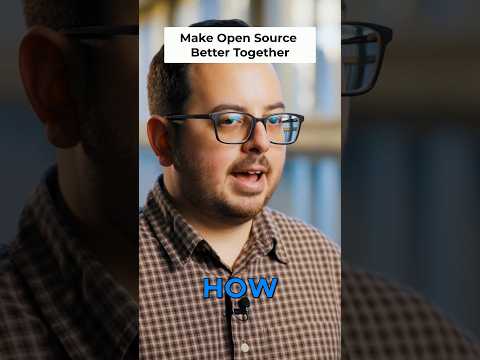
OpenAI won the CNCF End User Case Study Contest at KubeCon + CloudNativeCon North America 2025 in Atlanta. Fabian Ponce from OpenAI shared how anyone can make open source better. Read the full case study: https://www.cncf.io/case-studies/openai-2/
Support us on Patreon and get an ad-free RSS feed with some early episodes. https://www.patreon.com/LateNightLinux
Google wants you to use a selfie video for account recovery, LG will stop apps turning their smart TVs into residential proxy nodes, we disagree about how serious OpenAI’s agent hacking Hugging Face is, FreeBSD removes the last bits of GPL software and suffers an embarrassing git flub , and backing up to an encrypted NAS without ZFS.
Transform your ripped DVDs, CDs, and audiobooks into a personalized Netflix-like experience with Prologue. Access your entire library offline, manage collections, and enjoy audiobooks seamlessly, especially on CarPlay. #Audiobooks #Plex #CarPlay #DigitalLibrary #TechTips
Get My Course Linux Mastery Express (The FASTEST WAY to learn Linux):
https://linuxtex.thinkific.com
TLAC (Tuncor’s Local Anti-Cheat) is a brand new open-source, user-space anti-cheat built specifically for Linux — and it’s trying to fix the one problem still keeping Linux gamers out of multiplayer: anti-cheat trust.
Games like Valorant, Fortnite, and Apex Legends run great on Linux thanks to Proton and the Steam Deck, but kernel-level anti-cheat systems like Riot Vanguard, BattlEye, and Easy Anti-Cheat (EAC) still refuse to trust Linux machines. In this video, we break down why Linux gaming’s biggest problem was never performance — it was trust — and how solo developer Tuncor is trying to solve it with TLAC.
In this video we cover:
– Why Valorant, Fortnite, and Apex Legends still block Linux players
– How kernel-level anti-cheat (Vanguard, BattlEye, EAC) compares to user-space anti-cheat
– What TLAC actually does — memory scanning, signature detection, HWID bans, and eBPF integrity checks
– The real reason major publishers won’t support Linux gaming (hint: it’s not technical)
– Whether an open-source, privacy-respecting anti-cheat can actually succeed against the giants
If you’re a Linux gamer tired of being locked out of competitive multiplayer, or you’re just curious about the future of Linux anti-cheat and open-source security, this one’s for you.
If you enjoyed this video, like, subscribe, and let me know in the comments — do you think open-source anti-cheat can finally crack multiplayer gaming on Linux?
Community & Collaboration Discover how to connect and contribute through initiatives like Social Coworking sessions focused on SORTEE and text linting with Vale. These office hours offer a space for open source enthusiasts to collaborate and improve their projects. Social Coworking and Office Hours – Getting to Know SORTEE: Engage with the Society for Open, … Read more
Big Picture: Open Source at a Crossroads This week’s news paints a vivid picture of open source’s growing pains and triumphs. From NVIDIA’s ambitious AI safety alliance to nation-state attacks on OSS infrastructure, the ecosystem is both a battleground and a beacon. Whether you’re a developer, a gamer, or just someone tired of Big Tech … Read more
This week’s open source digest covers a wide range of topics from AI access to community sustainability and security. The standout story is OpenAI’s announcement to give 100,000 academic researchers free access to their frontier models by 2027. This move democratizes cutting-edge AI, empowering researchers to accelerate discovery across disciplines. Meanwhile, the Hugging Face Journal … Read more
We’re giving scientists, mathematicians, and engineers free access to our frontier models—starting with 10,000 researchers and expanding to 100,000 through 2027.
ChatGPT for Academic researchers is built to accelerate discovery across disciplines.
We believe the benefits of frontier AI should not be concentrated in a few companies and well-resourced labs. Researchers know their fields best. Our role is to put powerful tools in their hands and help accelerate their work.
The program will help researchers take on the hardest problems, accelerate discovery, and improve productivity across their work, from preparing grant applications to testing hypotheses.
Participants will receive access to our frontier models, including our GPT-5.6 family of models. Each workspace includes business-grade privacy and security protections. Researcher data is not used to train our models by default, and participants can invite up to four collaborators.
The program also includes training, hands-on support, and opportunities to learn from other researchers.
We use cookies on our website to give you the most relevant experience by remembering your preferences and repeat visits. By clicking “Accept All”, you consent to the use of ALL the cookies. However, you may visit "Cookie Settings" to provide a controlled consent.
This website uses cookies to improve your experience while you navigate through the website. Out of these, the cookies that are categorized as necessary are stored on your browser as they are essential for the working of basic functionalities of the website. We also use third-party cookies that help us analyze and understand how you use this website. These cookies will be stored in your browser only with your consent. You also have the option to opt-out of these cookies. But opting out of some of these cookies may affect your browsing experience.
Necessary cookies are absolutely essential for the website to function properly. These cookies ensure basic functionalities and security features of the website, anonymously.
Cookie
Duration
Description
cookielawinfo-checkbox-analytics
11 months
This cookie is set by GDPR Cookie Consent plugin. The cookie is used to store the user consent for the cookies in the category "Analytics".
cookielawinfo-checkbox-functional
11 months
The cookie is set by GDPR cookie consent to record the user consent for the cookies in the category "Functional".
cookielawinfo-checkbox-necessary
11 months
This cookie is set by GDPR Cookie Consent plugin. The cookies is used to store the user consent for the cookies in the category "Necessary".
cookielawinfo-checkbox-others
11 months
This cookie is set by GDPR Cookie Consent plugin. The cookie is used to store the user consent for the cookies in the category "Other.
cookielawinfo-checkbox-performance
11 months
This cookie is set by GDPR Cookie Consent plugin. The cookie is used to store the user consent for the cookies in the category "Performance".
viewed_cookie_policy
11 months
The cookie is set by the GDPR Cookie Consent plugin and is used to store whether or not user has consented to the use of cookies. It does not store any personal data.
Functional cookies help to perform certain functionalities like sharing the content of the website on social media platforms, collect feedbacks, and other third-party features.
Performance cookies are used to understand and analyze the key performance indexes of the website which helps in delivering a better user experience for the visitors.
Analytical cookies are used to understand how visitors interact with the website. These cookies help provide information on metrics the number of visitors, bounce rate, traffic source, etc.
Advertisement cookies are used to provide visitors with relevant ads and marketing campaigns. These cookies track visitors across websites and collect information to provide customized ads.