The Week’s Biggest Story: Nvidia to Acquire Hugging Face In a move that could redefine the open-source AI landscape, Nvidia is reportedly in advanced talks to acquire Hugging Face, the leading platform for hosting and sharing AI models, for a staggering $12.9 to $13 billion. This acquisition, first reported by The Information and corroborated by … Read more
The State of Open Source: From AI Agents to Enterprise Security This week’s Open Source digest paints a vivid picture of a community in constant evolution. From the hyper-personal use of AI in meal planning to the systemic challenges of patching 50,000 repositories, the stories reflect both the accessibility and the complexity of modern open … Read more
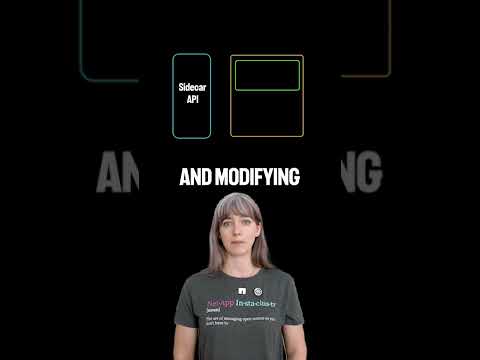
Follow a working mom as she turns a simple note about her daughter’s food preferences and allergies into a personalized weekly meal planner. See how she creates a shareable site, prepares an Instacart cart for approval, captures meal feedback from her phone, and sets up a weekly task to start the next plan.
Video by CNCF [Cloud Native Computing Foundation] via YouTube
CNCF CTO Chris Aniszczyk shares why it’s never too early to get involved in cloud native, and the many ways to contribute beyond code. Start at contribute.cncf.io.
Learn how to scale open-source remediation across 50,000+ repositories using OSERA standards and new tooling.
Dov Katz (Managing Director at Morgan Stanley) addresses the massive operational challenge of remediating software vulnerabilities across enterprises maintaining tens of thousands of source code repositories. He details how the OSERA (Open Source Enterprise Resiliency Alliance) initiative establishes low-risk back-patching tooling – such as the open-source Risk Navigator – and unifies financial industry standards to push back against fragmented, unstandardized private security patches.
🗽 Catch Us in New York! Join global financial leaders shaping open-source supply chain standards and enterprise security at OSFF New York on November 4–5, 2026.
🎟️ Register Now: https://hubs.ly/Q04n_bZL0
🔥 20% OFF DISCOUNT CODE: 26YTOSFFNY20C
🕒 Timestamps:
0:00 Managing Security Across 50,000+ Source Code Repositories
1:00 OSERA Tools & Operating Model: Local Scans & Low-Risk Back-Patching
2:14 Setting Industry Standards: Pushing Back on Proprietary Patches
3:20 Standardized Naming Conventions: Unifying the Voice of the Industry
📊 The Problem: The Enterprise Repository Patching Flood
Large financial institutions maintain tens of thousands of source code repositories (often exceeding 50,000 repos). When vendors and third parties flood the market with uncoordinated, private patches lacking standardized version numbers or uniform labeling, enterprise platform teams face paralysis. Without agreed-upon naming conventions, institutions cannot safely determine upgrade paths or automate remediation across their entire software estate without risking production breakage. 🏗️ The Solution: OSERA Tooling & Unified Naming Standards
Dov Katz outlines OSERA’s dual approach to scaling vulnerability remediation: Risk Navigator Tooling: Scanning internal software estates locally to isolate "dead-end" dependencies and execute low-risk, adjacent-version back-patches instead of forcing dangerous major version upgrades. Collective Industry Voice: Establishing clear, standardized naming conventions and public back-patching principles so institutions can present unified requirements to patch providers and design partners.
⚙️ Why This Matters for Financial EngineeringEliminating Upgrade Friction:
Standardized patch metadata allows automated tooling and agentic fleets to parse and apply dependency updates across 50,000+ repositories deterministically. Safe Space Collaboration: Financial institutions work together in a neutral venue to mutualize patch capacity and compel upstream suppliers to adhere to enterprise security standards.
Managing security at scale is a significant hurdle for financial institutions. Patching vulnerabilities individually is no longer sufficient when dealing with thousands of repositories. This session outlines the OSERA framework, designed to move beyond fragmented fixes toward a unified industry approach for the software supply chain.
By implementing consistent security standards, teams can prioritize effectively and reduce technical debt. We explore how tools like Risk Navigator facilitate this, offering a path to deploy critical patches within hours rather than weeks. This proof of concept demonstrates how an open operating model can streamline your entire maintenance lifecycle.
🌐 More about FINOS: https://www.finos.org/
📧 Join our newsletter: https://www.finos.org/sign-up
🎙️ Listen to our Open Source in Finance Podcast: https://www.youtube.com/@FINOS/podcasts
LinkedIn: https://www.linkedin.com/company/finosfoundation
Get the AwesomeOpenSource Merchandise
https://osia.printify.me
Support my Channel and ongoing efforts through Patreon:
https://patreon.com/awesomeopensource
Buy Me a Coffee or Beer
https://paypal.me/BrianMcGonagill?country.x=US&locale.x=en_US
=== Get My Novel ===
Entanglement – by Brian McGonagill
Dave is just a normal guy with a normal job that he doesn’t like that much. That is, until he meets Leo, and gets the job he never imagined. Action, adventure, betrayal, love, loss, and some serious weirdness happen throughout this science fiction thrill-ride.
— eBook on Amazon by Country —
US – United States – https://www.amazon.com/dp/B0DZJ5PMHG
UK – United Kingdom – https://www.amazon.co.uk/dp/B0DZJ5PMHG
DE – Germany – https://www.amazon.de/dp/B0DZJ5PMHG
FR – France – https://www.amazon.fr/dp/B0DZJ5PMHG
ES – Spain – https://www.amazon.es/dp/B0DZJ5PMHG
IT – Italy – https://www.amazon.it/dp/B0DZJ5PMHG
NL – Netherlands – https://www.amazon.nl/dp/B0DZJ5PMHG
JP – Japan – https://www.amazon.co.jp/dp/B0DZJ5PMHG
BR – Brazil – https://www.amazon.com.br/dp/B0DZJ5PMHG
CA – Canada – https://www.amazon.ca/dp/B0DZJ5PMHG
MX – Mexico – https://www.amazon.com.mx/dp/B0DZJ5PMHG
AU – Australia – https://www.amazon.com.au/dp/B0DZJ5PMHG
IN – India – https://www.amazon.in/dp/B0DZJ5PMHG
— Paperback by Country —
US – United States – https://www.amazon.com/dp/B0DZPM682N
UK – United Kingdom – https://www.amazon.co.uk/dp/B0DZPM682N
DE – Germany – https://www.amazon.de/dp/B0DZPM682N
FR – France – https://www.amazon.fr/dp/B0DZPM682N
ES – Spain – https://www.amazon.es/dp/B0DZPM682N
IT – Italy – https://www.amazon.it/dp/B0DZPM682N
NL – Netherlands – https://www.amazon.nl/dp/B0DZPM682N
PL – Poland – https://www.amazon.pl/dp/B0DZPM682N
SE – Sweden – https://www.amazon.se/dp/B0DZPM682N
JP – Japan – https://www.amazon.co.jp/dp/B0DZPM682N
CA – Canada – https://www.amazon.ca/dp/B0DZPM682N
AU – Australia – https://www.amazon.com.au/dp/B0DZPM682N
— Hard cover by Country —
US – United States – https://www.amazon.com/dp/B0DZPVSRNZ
UK – United Kingdom – https://www.amazon.co.uk/dp/B0DZPVSRNZ
DE – Germany – https://www.amazon.de/dp/B0DZPVSRNZ
FR – France – https://www.amazon.fr/dp/B0DZPVSRNZ
ES – Spain – https://www.amazon.es/dp/B0DZPVSRNZ
IT – Italy – https://www.amazon.it/dp/B0DZPVSRNZ
NL – Netherlands – https://www.amazon.nl/dp/B0DZPVSRNZ
PL – Poland – https://www.amazon.pl/dp/B0DZPVSRNZ
SE – Sweden – https://www.amazon.se/dp/B0DZPVSRNZ
=== Timestamps ===
00:00 Beginning
00:01 Introduction to Zima Board 2
00:37 Hardware
02:27 Project 1 – Get Streaming
05:48 Hardware impressions for Project 1
Video by Open Data Science and AI Conference via YouTube
MCP’s Biggest Rewrite: Statelessness, Tool Design, and Agent Skills
The Model Context Protocol (MCP) is evolving toward a stateless architecture designed to make AI agent systems easier to scale and operate in production.
In this episode, host Sheamus McGovern speaks with Kyle Stratis, founder of Stratis Data Labs and author of AI Agents with MCP, about the latest MCP changes, MCP clients and servers, tool design, state management, security, and why Agent Skills and MCP are complementary rather than competing approaches.
Learn what these changes mean for building more scalable, reliable, and production-ready AI agents with MCP.
00:00 MCP Servers vs. Agent Skills: What’s the Difference?
00:47 AI Agents with MCP: Introduction with Kyle Stratis
02:25 From Software Engineering to AI Agent Development
05:51 AI Agent Evals, Guardrails & Common Engineering Mistakes
08:45 Building AI Agents with the Model Context Protocol (MCP)
12:36 AI Agents vs. Agentic Workflows: Key Differences
16:03 MCP Architecture: Connecting AI Agents, Tools & Data
18:23 MCP Clients Explained: The Overlooked Part of Model Context Protocol
21:06 Stateless MCP Architecture: What Changed in the Latest MCP Spec
24:44 AI Agent Memory & State Management with MCP
27:08 Error Handling, Retries & Long-Running AI Agent Workflows
29:04 MCP Security: Clients, Servers & Trust Boundaries
33:01 MCP Tool Design: How Many Tools Should an AI Agent Have?
36:18 MCP vs. REST APIs: Why Wrapping API Endpoints Doesn’t Work
40:45 MCP Tool Discovery, Tool Selection & Context Management
44:26 Is MCP Dead? MCP vs. Agent Skills Explained
49:25 MCP + Agent Skills: How They Work Together
53:18 How to Design Better MCP Tools for AI Agents
57:13 The Future of MCP & AI Agent Development
59:17 Final Advice for Building Production AI Agents
Visit our website and choose the nearest ODSC AI event to attend and experience all our training and workshops: https://odsc.ai
To watch more videos like this, visit https://aiplus.training
Sign up for the newsletter to stay up to date with the latest trends in data science: https://opendatascience.com/newsletter/
Follow us online!
• Facebook: https://www.facebook.com/OPENDATASCI
• Instagram: https://www.instagram.com/odsc/
• Blog: https://opendatascience.com/
• LinkedIn: https://www.linkedin.com/company/open-data-science/
• X (twitter): https://x.com/_odsc
We use cookies on our website to give you the most relevant experience by remembering your preferences and repeat visits. By clicking “Accept All”, you consent to the use of ALL the cookies. However, you may visit "Cookie Settings" to provide a controlled consent.
This website uses cookies to improve your experience while you navigate through the website. Out of these, the cookies that are categorized as necessary are stored on your browser as they are essential for the working of basic functionalities of the website. We also use third-party cookies that help us analyze and understand how you use this website. These cookies will be stored in your browser only with your consent. You also have the option to opt-out of these cookies. But opting out of some of these cookies may affect your browsing experience.
Necessary cookies are absolutely essential for the website to function properly. These cookies ensure basic functionalities and security features of the website, anonymously.
Cookie
Duration
Description
cookielawinfo-checkbox-analytics
11 months
This cookie is set by GDPR Cookie Consent plugin. The cookie is used to store the user consent for the cookies in the category "Analytics".
cookielawinfo-checkbox-functional
11 months
The cookie is set by GDPR cookie consent to record the user consent for the cookies in the category "Functional".
cookielawinfo-checkbox-necessary
11 months
This cookie is set by GDPR Cookie Consent plugin. The cookies is used to store the user consent for the cookies in the category "Necessary".
cookielawinfo-checkbox-others
11 months
This cookie is set by GDPR Cookie Consent plugin. The cookie is used to store the user consent for the cookies in the category "Other.
cookielawinfo-checkbox-performance
11 months
This cookie is set by GDPR Cookie Consent plugin. The cookie is used to store the user consent for the cookies in the category "Performance".
viewed_cookie_policy
11 months
The cookie is set by the GDPR Cookie Consent plugin and is used to store whether or not user has consented to the use of cookies. It does not store any personal data.
Functional cookies help to perform certain functionalities like sharing the content of the website on social media platforms, collect feedbacks, and other third-party features.
Performance cookies are used to understand and analyze the key performance indexes of the website which helps in delivering a better user experience for the visitors.
Analytical cookies are used to understand how visitors interact with the website. These cookies help provide information on metrics the number of visitors, bounce rate, traffic source, etc.
Advertisement cookies are used to provide visitors with relevant ads and marketing campaigns. These cookies track visitors across websites and collect information to provide customized ads.